
Architectural Views from Burgas Opera House Area
Explore stunning architectural views from Burgas Opera House area in 2025. See the best city landmarks and hidden urban designs today. Plan your visit now!
On this page
Burgas is a vibrant coastal city with a rich tapestry of historic and modern design. The Burgas State Opera stands as a central pillar of this cultural landscape. Travelers often seek out the best architectural views from Burgas Opera House area to capture the city's spirit. This district blends Soviet-era brutalism with sleek, contemporary urban developments found in 2025.
You will find a unique mix of textures and styles within a short walk of the opera. The surrounding streets offer plenty of opportunities for professional and amateur photography alike. Many visitors enjoy exploring the contrasting heights and shapes of the nearby residential and commercial buildings. Understanding the local history helps you appreciate the aesthetic value of these structures even more.
The Brutalist Majesty of the Opera Building
The Burgas Opera House itself is a masterpiece of late modernist architecture from the mid-twentieth century. Its massive concrete facade features sharp geometric patterns that create striking shadows during the golden hour. You can admire the rhythmic placement of the structural columns from the main entrance plaza. This building represents a bold era of Bulgarian design that still commands respect today.
Architects from the 1950s designed the structure to feel both heavy and surprisingly airy. The large glass windows reflect the bustling city life of 2025 while maintaining a solemn atmosphere. You should walk around the entire perimeter to see how the shapes change from different angles. It remains one of the most photographed buildings in the entire Black Sea region.
The interior spaces are just as impressive as the exterior concrete shells and textured walls. High ceilings and grand staircases provide an elegant backdrop for the many performances held here. You can often find detailed carvings and artistic flourishes hidden in the stone work of the lobby. These details highlight the craftsmanship that went into creating this important cultural monument.
Photographers should visit during the morning when the sun hits the eastern face of the building. The contrast between the grey concrete and the blue Bulgarian sky is truly spectacular for pictures. You will notice how the sharp edges of the roofline cut into the horizon with precision. This spot is a perfect starting point for your architectural journey through the city center.
Perspectives from the Burgas Opera House Roof
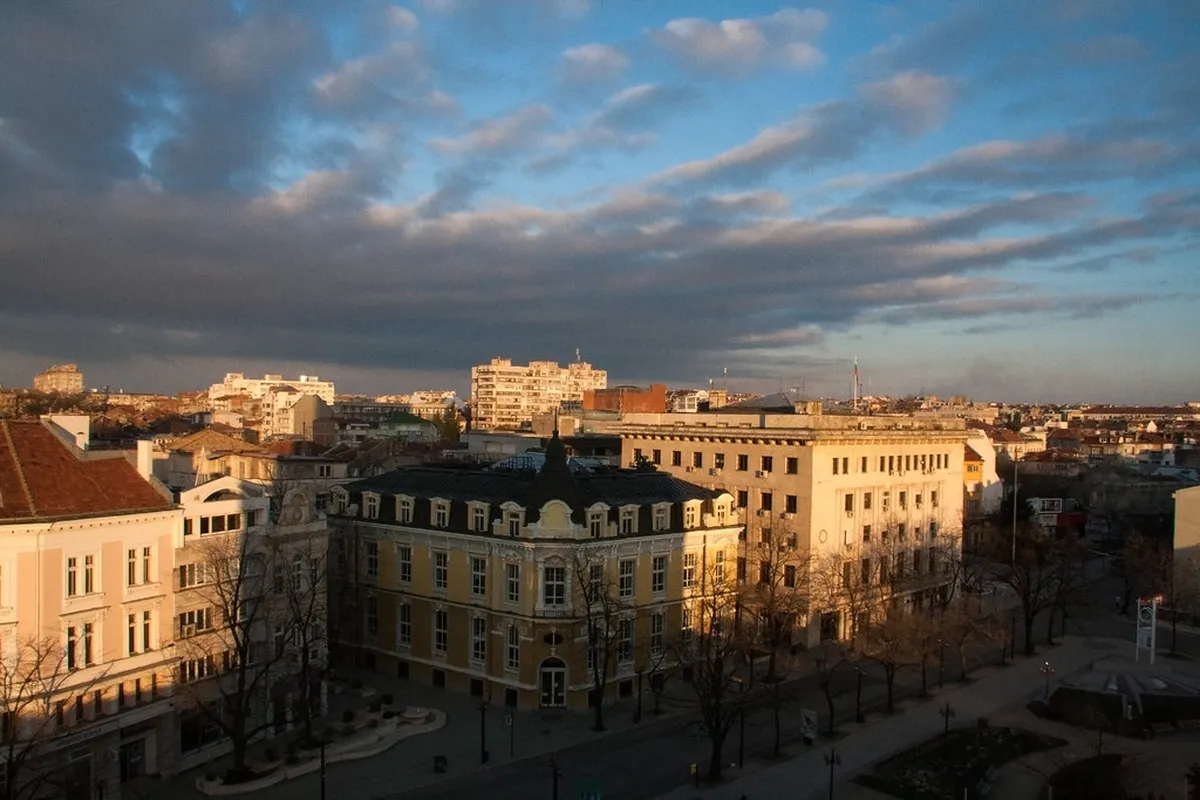
Looking at the city from the Burgas opera house roof provides a totally different perspective. From this height, you can see the organized layout of the central pedestrian zones and parks. The roofline allows you to look down on the red-tiled tops of older houses nearby. It is a rare chance to see how the city has grown over the decades.
The view extends toward the Port of Burgas and the shimmering waters of the Black Sea. You can spot the large industrial cranes and the modern terminal buildings from this elevated vantage point. Modern glass skyscrapers now rise alongside the historic shipping infrastructure of the coastal area. This mix of industry and leisure defines the modern identity of this Bulgarian port city.
Many travelers find that the best viewpoints in Burgas are those that offer a clear 360-degree panorama. Seeing the urban sprawl from above helps you navigate the winding streets and hidden courtyards below. You can easily identify the green expanse of the Sea Garden stretching along the coastline. The rooftop view captures the harmony between urban density and the natural marine environment.
In 2025, new viewing platforms have made these high-altitude perspectives even more accessible for tourists. You can spend an hour identifying different architectural styles from the Neo-Renaissance to contemporary functionalism. The elevation provides a sense of peace above the noise of the busy metropolitan streets. Be sure to bring a wide-angle lens to capture the full scale of the cityscape.
The Grandeur of Troikata Square Architecture
Just a few steps from the Opera House lies Troikata Square, the heart of the city. This open space is surrounded by some of the most significant administrative buildings in the region. The scale of the square allows you to appreciate the full height of the surrounding modern structures. It serves as a communal living room where architecture and social life meet every day.
The most famous landmark here is the Monument to the Soviet Army, known locally as Alyosha. This towering stone statue stands against a backdrop of clean, rectangular buildings from the socialist era. The symmetry of the square creates a sense of order and grandiosity that is typical of European plazas. You can see how the wide granite paving stones lead your eyes toward the monument.
Modern renovations in 2025 have added sleek benches and artistic lighting to the square's overall design. These contemporary elements complement the older stone facades and provide a comfortable place for people to gather. The reflection of the street lights on the polished surfaces adds a magical touch to evening walks. It is a fantastic place to observe the evolution of urban planning in Bulgaria.
You can also find several city center rooftops that overlook this vibrant square for even better views. These spots allow you to see the intricate patterns of the fountain and the movement of the crowds. The square remains a focal point for architectural enthusiasts looking for historical and cultural context. Every corner of the plaza tells a story about the growth of Burgas over the years.
Neoclassical Gems on Alexandrovska Street
Alexandrovska Street is the main pedestrian artery that runs near the Burgas State Opera area. This street is famous for its beautifully preserved Neoclassical and Secession-style buildings from the early 1900s. You will see ornate balconies, decorative stucco work, and elegant window frames on almost every block. These structures provide a soft contrast to the heavy concrete of the nearby Opera House.
Walking down this street feels like stepping back in time to the golden age of the city. Many of these buildings have been restored to their original pastel colors in recent years. You can find boutique shops and cozy cafes housed within these historic architectural treasures. The street level detail is incredible, with wrought-iron railings and carved wooden doors greeting every visitor.
Photographers often focus on the vertical lines and repetitive elements of these classic European facades. The play of light across the curved balconies creates beautiful patterns throughout the entire afternoon. You should look up to see the intricate roof decorations and small attic windows that dot the skyline. These details are often missed by people rushing to the nearby beach or park.
The preservation of these buildings shows the commitment of the city to its diverse architectural heritage. In 2025, strict regulations ensure that any new development respects the height and style of the surroundings. This creates a cohesive urban environment that is very pleasant for long walks and exploration. It is one of the most charming areas for architectural enthusiasts in all of Bulgaria.
Contemporary Designs and Urban Innovation
While history is important, the area around the Opera House also features many examples of modern innovation. New office buildings and luxury apartments utilize glass and steel to create a futuristic look. These structures often feature green roofs and sustainable materials to meet modern environmental standards for 2025. They represent the forward-thinking spirit of the new generation of Bulgarian architects and designers.
The contrast between the old stone walls and the new glass panels is a major visual theme. You can see the reflection of the historic cathedral in the windows of a nearby tech hub. This dialogue between different eras makes the city center a dynamic and exciting place to visit. It shows that Burgas is a city that respects its past while embracing the future.
Many of these new buildings have won awards for their creative use of limited urban space. You will notice how architects have incorporated public art and seating into the ground floor designs. These small plazas provide a break from the dense building blocks and encourage social interaction. It is a great example of how modern architecture can improve the daily lives of residents.
Exploring these sites gives you a complete picture of the architectural diversity available in the city center. You can walk from a 100-year-old house to a high-tech glass tower in just five minutes. This compact variety is what makes the area near the Opera House so special for travelers. Make sure to keep your camera ready for the unexpected beauty of these modern structures.
Frequently Asked Questions
Can I visit the roof of the Burgas Opera House?
Access to the roof is usually restricted to special events or organized architectural tours in 2025. You should check the official website of the Burgas State Opera for any updated visiting hours. Some nearby buildings offer similar rooftop views if the opera roof is closed to the public.
What is the best time for architectural photography in Burgas?
The golden hour just before sunset offers the best light for capturing the textures of the buildings. Morning light is also excellent for the eastern facades of the Opera House and the Cathedral. Most landmarks are beautifully illuminated at night for long-exposure photography after the sun goes down.
Are there walking tours focused on Burgas architecture?
Yes, several local guides offer specialized tours that cover the history and design of the city center. These tours often start near the Opera House and explore the neoclassical buildings of Alexandrovska Street. You can book these experiences through local tourist information centers or online travel platforms.
How much does it cost to explore the architectural sites?
Most of the best architectural views are located in public areas and can be enjoyed for free. You only need to pay if you plan to enter certain museums or attend a show. Walking the streets and squares is a budget-friendly way to see the beauty of the city.
The area surrounding the Burgas Opera House is a treasure trove of architectural styles and stunning urban views. From the brutalist concrete of the opera to the neoclassical charm of the pedestrian streets, there is much to see. Plan your visit in 2025 to experience the unique blend of history and modernity in this coastal gem. Don't forget to look up and explore the many best viewpoints in Burgas today!
Key Takeaways
- The Burgas Opera House is a prime example of Bulgarian modernist architecture with striking concrete shapes.
- Troikata Square and Alexandrovska Street offer a diverse mix of socialist-era and neoclassical designs.
- The year 2025 has brought new rooftop access and modern urban developments to the city center area.
Related reads: cityviewpoints.com, finding the best views of burgas opera.