
History of Alyosha monument on Bunardzhik Hill Guide
Explore the history of Alyosha monument on Bunardzhik Hill. Learn about this iconic Plovdiv landmark and its 2025 visiting tips in our guide.
On this page
The history of Alyosha monument on Bunardzhik Hill is a fascinating journey through Bulgarian and Soviet politics. This massive statue towers over Plovdiv and serves as a significant landmark for the local community. It stands on the second highest hill in the city and offers a very unique perspective. Visiting the site provides a deep look into the artistic and social goals of the previous century.
This guide will explore the origins, construction, and modern significance of this giant granite soldier in Plovdiv. You will learn about the people who built it and the controversies that still surround it today. The monument remains a point of interest for history buffs and casual travelers alike in 2025. It is a place where history meets stunning natural beauty and urban architectural design.
Construction and Early Design Efforts
The history of Alyosha monument on Bunardzhik Hill began in 1948 with a major national design contest. Local architects and sculptors worked together to create a symbol for the city of Plovdiv. The team finally chose a design that featured a lone soldier holding a machine gun. Granite from the hills near Plovdiv was used to build the entire massive statue structure.
Construction work started in 1954 and required the help of many skilled local craftsmen and builders. The builders faced many challenges while lifting the heavy stone pieces to the top of the hill. They used special cranes and transport systems to move the materials up the steep and rocky slopes. This effort demonstrated the industrial capabilities of Bulgaria during the middle of the twentieth century period.
The statue was officially inaugurated in November 1957 with a large ceremony for the general public. Thousands of people gathered on the hill to witness the unveiling of this new granite giant. It was designed to represent the Soviet soldier who helped liberate Bulgaria from the Axis powers. The monument quickly became a central piece of the city's cultural and political identity during that time.
The base of the monument is decorated with intricate bas-reliefs showing scenes of war and peace. These carvings tell a story of struggle and the eventual victory over the invading German forces. Many visitors spend time examining these details before looking up at the towering figure of Alyosha. The scale of the project remains impressive even by modern construction standards in the current year.
The Real Person Behind the Statue
Many people do not know that the statue was actually modeled after a real human being. His name was Aleksey Skurlatov and he was a soldier in the Soviet signal corps. He served in Plovdiv during the war and made many friends among the local Bulgarian people. One of these friends was a worker named Metodi Shavitov who lived in the city.
Metodi took a photograph of Aleksey and later gave it to the sculptors of the monument. The artists used his likeness to create the face and the posture of the granite soldier. Aleksey himself did not know about the statue for many years after the war had ended. He only discovered his connection to the Plovdiv landmark much later in his life.
In 1982 Aleksey Skurlatov finally visited Plovdiv to see the monument that shared his famous name. He received a warm welcome from the citizens and became an honorary citizen of the city. This personal connection adds a human element to the otherwise cold and massive stone structure. It reminds us that history is made of individual lives and personal relationships between different nations.
The name Alyosha is a common Russian diminutive for the name Aleksey which fits the soldier. This name became so popular that a famous song was written about the monument in the sixties. The song helped make the statue known across the entire Soviet Union and the Eastern Bloc. Today people still refer to the monument by this friendly and familiar nickname during their visits.
Symbolism of the Granite Giant
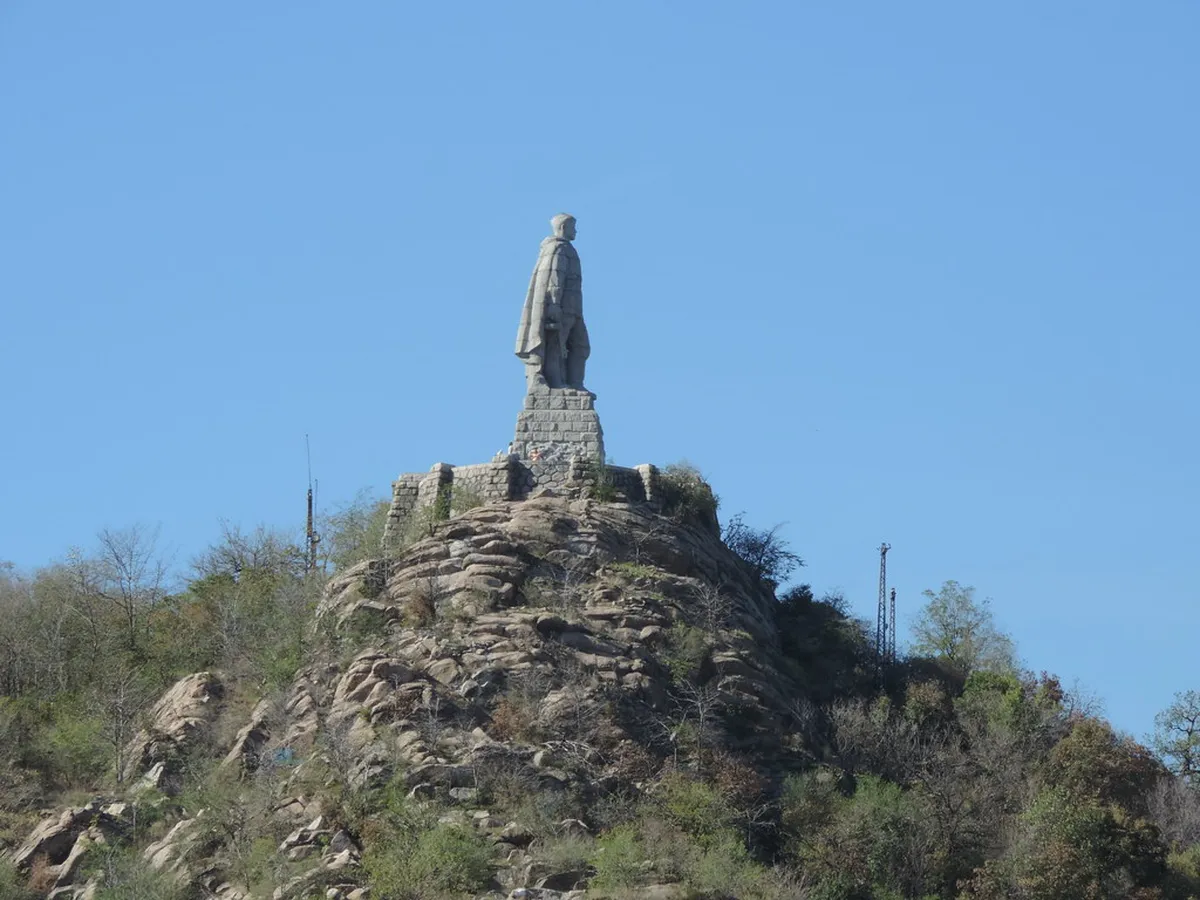
The Alyosha monument stands exactly eleven meters tall and rests on a six meter high pedestal. It was built using reinforced concrete and faced with solid granite blocks from the surrounding hills. The soldier looks toward the east which symbolizes the direction of the Soviet Union at that time. He holds a Shpagin submachine gun in a relaxed position pointing toward the ground.
This posture was chosen to represent peace and the end of the long and difficult war. The designers wanted to show a soldier who was no longer fighting but standing guard over peace. The massive size was intended to evoke feelings of power and eternal protection for the city. It remains one of the tallest monuments of its kind in the entire Balkan region today.
The location on Bunardzhik Hill was selected for its high visibility from every part of Plovdiv. The monument serves as a nautical marker for people navigating through the city streets and neighborhoods. It is impossible to miss the silhouette of the soldier against the blue Bulgarian sky during the day. At night the statue is often lit with bright lights to maintain its constant presence.
Every element of the design was carefully planned to convey a message of strength and lasting friendship. The granite material was chosen specifically for its durability against the harsh weather and passing of time. The statue has survived decades of sun and rain without losing its impressive and sharp structural details. It stands as a testament to the artistic vision of the mid-twentieth century Bulgarian sculptors.
Modern Controversies and Public Opinion
After the fall of the communist regime in 1989 the monument became a subject of debate. Some citizens wanted to remove the statue because they saw it as a symbol of occupation. Others argued that it was an important part of history and should be preserved for future generations. These debates led to several attempts by the local government to dismantle the granite soldier.
In 1996 the Supreme Court of Bulgaria ruled that the monument could not be destroyed or moved. The court declared it a historical monument that must be protected by the national law of the land. Since that ruling the statue has remained in its place overlooking the growing city of Plovdiv. However the debate regarding its presence continues to surface in local politics every few years.
Many people now view the site through the lens of Bunardzhik Hill monument views rather than politics. It has become a popular place for young people to gather and watch the sun go down. The area around the base is often filled with locals enjoying a walk or a quiet evening. It has transitioned from a political symbol into a common social space for the city.
Some activists have suggested transforming the monument into something else or adding new historical context. There are proposals to build a museum or educational center near the site to explain its history. For now the statue stands exactly as it did when it was first completed in 1957. The surrounding park remains well maintained and provides a peaceful escape from the busy city traffic below.
Bunardzhik Hill Monument Views and Photography
One of the main reasons people visit the site today is for the spectacular panoramic views. From the base of the statue you can see the entire city and the Rhodope Mountains. The view is especially beautiful during the golden hour just before the sun sets in the west. Photographers often flock to this spot to capture the changing colors of the Plovdiv urban skyline.
You can see the other hills of Plovdiv from this high vantage point on Bunardzhik Hill. The ancient Roman theater and the Old Town are visible in the distance across the urban center. The Maritsa River winds through the city and reflects the light of the morning or evening sun. It is truly the best place to get a sense of the layout of Plovdiv.
The monument itself provides a great subject for photography because of its massive scale and sharp angles. You can capture interesting shots by using the granite base to frame the city views in the background. Many visitors take selfies with the giant soldier to show the scale of the impressive stone work. The contrast between the grey granite and the green park trees makes for excellent pictures.
In the winter the views change as snow covers the red rooftops of the traditional Bulgarian houses. The air is often clearer in the colder months which allows for even better long distance visibility. You might even see the snowy peaks of the distant Balkan Mountains on a very clear day. Every season brings a new perspective to this historical and scenic location in central Bulgaria.
Practical Guide for Visitors in 2025
Reaching the monument requires a bit of a walk up the winding paths of the park area. You should follow the guide on walking to Bunardzhik Hill monument from center to find the best route. The paths are paved but they can be quite steep in certain sections of the climb. It is best to wear comfortable shoes and bring a bottle of water for the journey.
There are no entrance fees to visit the monument or the surrounding park at any time. It is open twenty four hours a day and remains accessible to the public throughout the year. You will find several benches along the way where you can rest and enjoy the nature. The park is a favorite spot for local joggers and pet owners during the early morning hours.
If you visit during the summer it is best to go in the early morning or evening. The heat in Plovdiv can be quite intense during the middle of the day in July. There is plenty of shade under the trees in the lower parts of the hill park. However the summit near the statue is quite exposed to the direct sun and the wind.
For those who prefer not to walk all the way there is a small parking lot. It is located near the middle of the hill and reduces the walking time significantly. From there you only need to climb a few sets of stairs to reach the top. This makes the monument accessible to families with children and those who have limited mobility. Enjoy your visit to this unique piece of Plovdiv history in 2025.
Frequently Asked Questions
Is the Alyosha monument free to visit in Plovdiv?
Yes the Alyosha monument is completely free to visit for everyone at all times. There are no tickets or entry fees for the park or the statue area. You can explore the entire hill without spending any money during your trip to Plovdiv. This makes it one of the best viewpoints and rooftops in Plovdiv for budget travelers.
How long does it take to walk to the top of the hill?
The walk usually takes between twenty and thirty minutes from the bottom of the park. It depends on your pace and how many times you stop to see the view. The paths are well maintained and offer a pleasant hike through the green trees and plants. Most visitors find the climb to be moderate and very rewarding once they reach the summit.
Was the monument really going to be destroyed in the nineties?
There were several serious proposals to remove the monument during the transition to democracy. Local politicians debated the issue for several years and faced pressure from various activist groups. However a court ruling in 1996 protected the statue as a historical and cultural monument. Today it remains in place as a permanent part of the city skyline and history.
The history of Alyosha monument on Bunardzhik Hill reflects the complex past of modern Bulgaria. It remains an impressive feat of engineering and a powerful piece of socialist era public art. Whether you visit for the history or the views it is an essential stop in Plovdiv. Plan your visit to this granite giant and experience the spirit of the city for yourself today.
Key Takeaways
- The statue was built between 1954 and 1957 using local granite stone.
- It was modeled after a real Soviet soldier named Aleksey Skurlatov.
- The monument offers some of the best panoramic views in the city of Plovdiv.
- It remains a controversial but legally protected historical landmark in 2025.
Related reads: cityviewpoints.com, nebet tepe hill sunset, sahat tepe clock tower.